

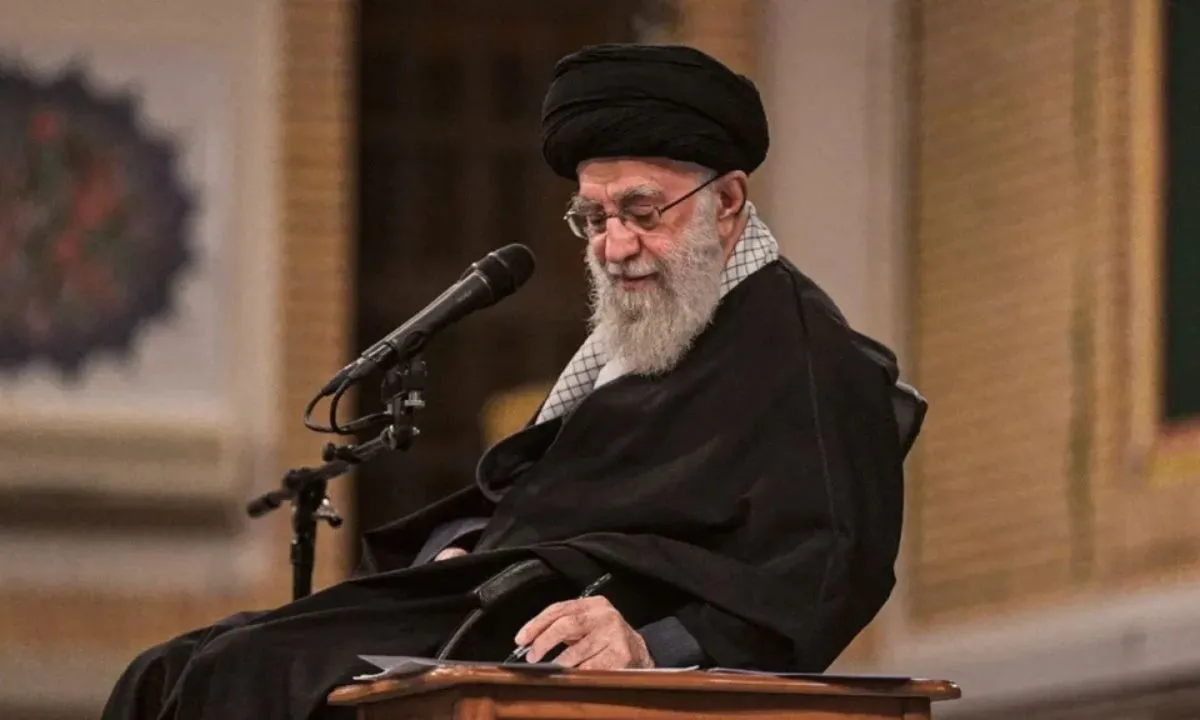
Ayatollah Ali Khamenei led Iran as Supreme Leader for 37 years. He always appeared modest in public. He wore simple robes. He lived in a small home. He spoke about poverty and piety.
But behind that image was a different reality. Investigative journalists and U.S. officials uncovered a vast financial empire. It was worth between $95 billion and $200 billion. It operated through secret organizations, shell companies, and offshore accounts.
This is the full story of Ayatollah Ali Khamenei’s net worth – what we know, how it was built, and where the money went.
Quick Bio
| Attribute | Details |
| Full Name | Ali Hosseini Khamenei |
| Date of Birth | 19 April 1939 |
| Place of Birth | Mashhad, Iran |
| Education | Religious studies in Mashhad, Najaf (Iraq), and Qom (Iran) |
| Political Role | Supreme Leader of Iran (1989–2026) |
| Previous Role | President of Iran (1981–1989) |
| Length of Rule | 37 years – longest-serving Iranian leader |
| Religion | Islam, Twelver Shi’a |
| Estimated Net Worth | $95 billion – $200 billion (controlled through Setad) |
| Key Organization | Setad Ejraiye Farmane Hazrate Emam |
| Date of Death | 28 February 2026 (aged 86) |
| Cause of Death | U.S.-Israeli military strike on Tehran |
| Successor | Mojtaba Khamenei (reported) |
What Was Ali Khamenei’s Net Worth?
Ali Khamenei’s official personal net worth was listed at just $50,000. That figure reflects his declared salary and personal assets as a cleric. But this number tells almost nothing about his true financial power.
Through a powerful organization called Setad, Khamenei controlled assets estimated at $95 billion to $200 billion. These assets included real estate, oil companies, banks, telecom firms, and investments across multiple countries.
Key Numbers at a Glance:
- Official personal net worth: $50,000
- Setad-controlled empire: $95B – $200B
- $200B = nearly half of Iran’s entire GDP ($434B in 2025)
- $200B = more than double Iran’s annual oil exports
- Would rank him in the Forbes global top 10 billionaires
If the $200 billion estimate is accurate, Khamenei would have been wealthier than Warren Buffett and Amancio Ortega – the founder of Zara. He would have ranked among the ten richest people on the planet.
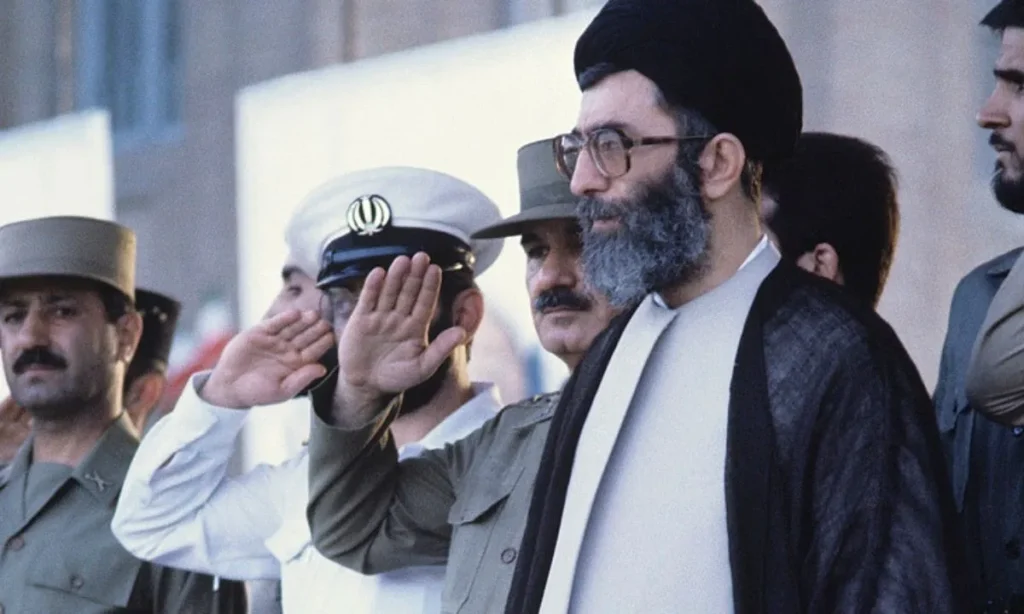
$200 Billion Alleged Empire – Setad Explained
Setad’s full name is Setad Ejraiye Farmane Hazrate Emam – “The Headquarters for Executing the Order of the Imam.” It was created in 1989, the same year Khamenei became Supreme Leader.
Its original purpose was narrow. After the 1979 Islamic Revolution, many people fled Iran and left behind properties. Setad was supposed to manage those properties temporarily and use them for charity.
That never happened. Instead, Setad grew into one of the largest financial conglomerates in the Middle East. It became a tool of power – and wealth – for Khamenei’s office.
What Setad Controls:
- Real estate – vast property portfolios across Iran and overseas
- Oil and energy – stakes in petroleum companies
- Telecommunications – major telecom investments
- Banking and finance – shares in financial institutions
- Pharmaceuticals – including Iran’s COVID-19 vaccine (COVIran Barekat)
- Healthcare and infrastructure – broad presence across public sectors
- Ostrich farming – one of Setad’s more unusual business ventures
- Contraceptive manufacturing – part of its pharmaceutical arm
A landmark 2013 Reuters investigation estimated Setad’s assets at at least $95 billion. The report described it as a “massive economic organization that answers only to the Supreme Leader.” It paid no taxes. It underwent no external audits. It operated with total impunity.
By 2026, U.S. officials believed the total value – including growth and sanctions evasion – had grown to as much as $200 billion.
During the COVID-19 pandemic, Setad produced Iran’s first domestic vaccine. Khamenei received the shot on live television. It was both a public health moment and a reminder of Setad’s enormous reach into everyday Iranian life.
Estimated Net Worth Breakdown (2026)
| Source / Year | Estimated Value | Key Notes |
| Reuters Investigation (2013) | $95 billion | Setad assets in property, telecoms, oil, banks |
| U.S. Officials / Analysts (2020s) | Up to $200 billion | Includes growth and sanctions evasion gains |
| Israeli Ynet Investigation (2026) | $100B – $200B | Published near time of Khamenei’s death |
| Celebrity Net Worth (2026) | $50K personal / $200B empire | Highlights gap between image and reality |
| Various Media (2025–2026) | $95B – $200B | Controlled via Setad and linked shell companies |
Note: These figures are not audited like Forbes estimates. Iran’s lack of financial transparency and the impact of international sanctions make precise valuation impossible. However, even the lower estimates far exceed the wealth of most world leaders.
Iran’s Poverty vs. Khamenei’s Wealth
The contrast between Khamenei’s empire and Iran’s economic reality is staggering. While he controlled assets worth up to $200 billion, ordinary Iranians faced severe hardship.
Iran’s Economic Crisis – Key Facts:
- Annual inflation running at 40%
- More than one-third of the population living below the poverty line
- Youth unemployment at 20%
- Half of men aged 25–40 were unemployed and not actively seeking work
- Millions of university graduates excluded from the job market – many forced to emigrate
- Serious energy crisis – 50% electricity deficit in total generation capacity
- Severe water resource depletion across the country
- Iran ranked 177th in the world for per capita income
- Total population: over 90 million people
Iran sits on enormous reserves of oil and natural gas. Yet the country cannot keep the lights on. It cannot generate enough jobs for its people. Millions of its educated young people leave abroad just to survive.
Meanwhile, Khamenei’s Setad quietly grew richer – completely outside parliamentary oversight
Global Investments: Spain, London, Venezuela & More
Khamenei’s financial empire was not limited to Iran. Investigations revealed a wide international network of luxury properties, bank accounts, and shell companies spread across multiple countries.
Spain – A Favourite Destination
Spain became one of the most important locations for Khamenei family investments. Reports link the family to:
- Luxury resorts and golf courses in Mallorca
- High-end hotels in Madrid and Marbella
These investments intensified after Iran’s 2022 social unrest. The family moved more capital abroad, treating Spanish real estate and tourism as a financial safe haven in case the regime collapsed.
United Kingdom
- Luxury flats in London, managed through Iranian intermediaries with dual nationality
Venezuela
Venezuela was both a political ally and a financial partner. The Khamenei family used Venezuelan channels to:
- Move capital from Iranian oil sales while bypassing international sanctions
- Deposit part of the family’s funds safely outside Iran
- Run a money laundering operation to protect family wealth if the regime fell
Other Locations
- Syria and the UAE – bank accounts for the family’s funds
- Liechtenstein and Switzerland – shell companies used to hide true ownership
How the Money Was Hidden
The money trail was carefully dispersed. Front men were Iranian citizens with dual nationality living abroad. They officially owned and managed properties on behalf of the Khamenei family. Ownership was fragmented across a web of companies – making it extremely difficult to trace back to its source.
How Setad Seized Properties
Setad did not simply buy assets. It took them. The method was systematic and ruthless.
Setad would approach revolutionary courts and claim that certain properties were “abandoned.” It argued owners had fled the country or were “enemies of the regime.” Courts issued seizure orders – often without giving real owners any chance to defend themselves.
Once legal control was obtained, properties were auctioned to grow Setad’s cash reserves or absorbed directly into its real estate portfolio.
Mafia-Like Tactics Used by Setad:
- Property owners were pressured to pay rent to Setad for their own properties
- Those who refused faced forcible eviction
- Many victims were members of the Baha’i religious minority – the most persecuted group in Iran
- Others had ties to the Shah’s regime and were targeted as political enemies
Beyond real estate, entire economic sectors were pressured to pay fees to Khamenei-linked companies just to keep operating. This included healthcare firms, infrastructure companies, and the automotive industry. State-owned land was privatised and quietly transferred into family-controlled entities.
This capital allowed Khamenei to finance his security apparatus and maintain the loyalty of political factions – without ever needing parliament’s approval or being dependent on oil price fluctuations.
Early Life and Religious Education
Ali Hosseini Khamenei was born on 19 April 1939 in Mashhad, Iran’s second-largest city and a major centre of Shia pilgrimage. He was the second of eight children in a clerical family of modest means. His father, Sayyid Javad Khamenei, was a mid-ranking religious scholar known for an ascetic lifestyle.
Khamenei began his religious education in Mashhad’s local seminaries. He later moved to Najaf in Iraq and then to Qom – Iran’s leading centre of Shia scholarship. In Qom, he came under the deep influence of Ayatollah Ruhollah Khomeini.
Khomeini’s fierce opposition to the Western-backed Shah shaped Khamenei’s entire worldview. He also engaged with the writings of Sayyid Qutb – an Islamist thinker who rejected secular nationalism in favour of clerical rule.
Note: Some sources cite 1935 as his birth year. Official Iranian biographies state 1939.
Revolutionary Credentials
Khamenei became politically active in the early 1960s. He opposed the Shah’s modernisation programme and his government’s close ties to the United States.
- Arrested multiple times by SAVAK – the Shah’s feared secret police
- Spent time in solitary confinement
- Subjected to internal exile in remote areas of Iran
These arrests later became central to his revolutionary credentials. Following the 1979 Islamic Revolution – which toppled Shah Mohammad Reza Pahlavi – Khamenei quickly rose in the new power structure. He served on the Revolutionary Council and led Friday prayers in Tehran.
In June 1981, he survived an assassination attempt. A bomb hidden inside a tape recorder exploded during one of his speeches. His right arm was permanently injured.
Later that year, after President Mohammad Ali Rajai was assassinated, Khamenei was elected as Iran’s third president. He served two terms from 1981 to 1989 – a period dominated by the brutal Iran-Iraq War.
Supreme Leader
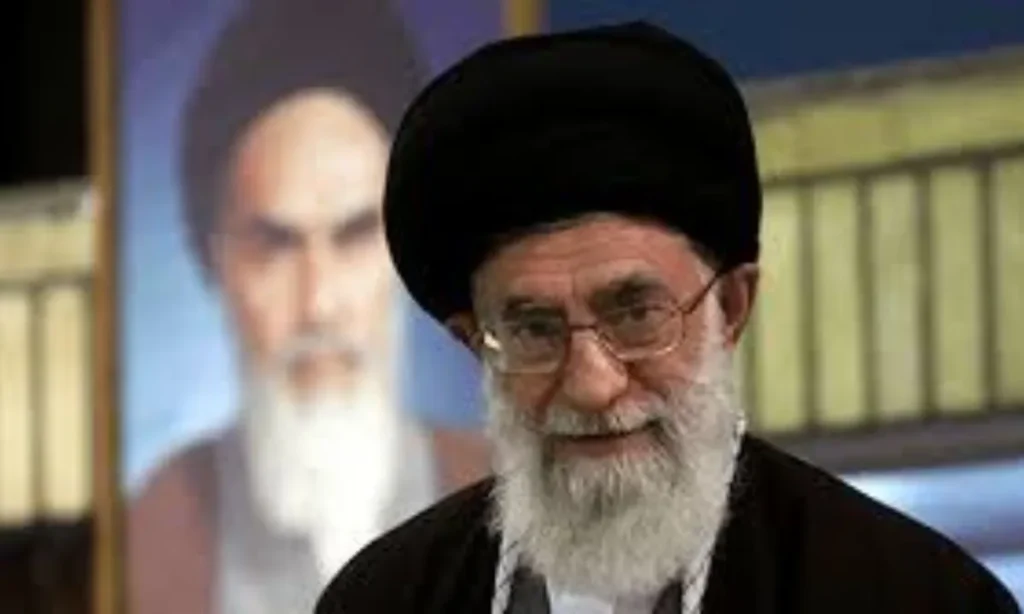
When Ayatollah Khomeini died in 1989, Khamenei did not technically qualify for the Supreme Leader position. Iran’s constitution required a high clerical rank – a rank Khamenei did not hold. The Assembly of Experts revised the constitution, lowered the threshold, and quickly elevated him.
Once in power, Khamenei steadily expanded his authority. He built control over every major institution:
- The Islamic Revolutionary Guard Corps (IRGC) – Iran’s most powerful military force
- The judiciary – appointing its head and shaping its decisions
- The Guardian Council – which vetted every candidate for elected office
- State media – controlling the national narrative
- Intelligence services – overseeing all security operations
Elected presidents and parliaments technically operated beneath him. In practice, ultimate power rested entirely with Khamenei.
His tenure saw Iran advance its nuclear enrichment programme, endure waves of international sanctions, and build a network of proxy forces across Lebanon, Iraq, Syria, Yemen, and Gaza. He faced major domestic protests in 2009, 2017, 2019, and 2022. Each time, the state responded with force.
Personal Life
Khamenei married Mansoureh Khojasteh Baqer Zadeh in 1964. The couple had six children – four sons and two daughters. His family largely avoided public life.
Khamenei cultivated an image of personal modesty throughout his entire rule. He appeared in simple clerical robes. He spoke about Islamic simplicity and the dangers of materialism. The gap between that public image and his actual financial empire became one of the defining ironies of his leadership.
Son Mojtaba: The Next Empire
Of Khamenei’s sons, one has attracted intense scrutiny: Mojtaba Khamenei. After his father’s death, he emerged as the leading candidate of Iran’s hardline wing to become the next Supreme Leader.
Investigative reporting has linked Mojtaba to his own separate financial empire:
- A multi-billion-dollar overseas property network
- Luxury real estate across the United Kingdom, UAE, and Switzerland
- Operations structured through intermediaries and offshore companies
His formal role was never publicly defined. But opposition figures and Western analysts long believed he wielded significant behind-the-scenes influence – particularly within conservative clerical and security circles.
Following his father’s death, the enormous task of unravelling the Khamenei family’s financial labyrinth has begun. Recovering those funds – and returning them to the Iranian people – is expected to take years.
Controversies and Comparisons
Khamenei’s wealth became a lightning rod for criticism – both inside Iran and internationally. The contrast was impossible to ignore.
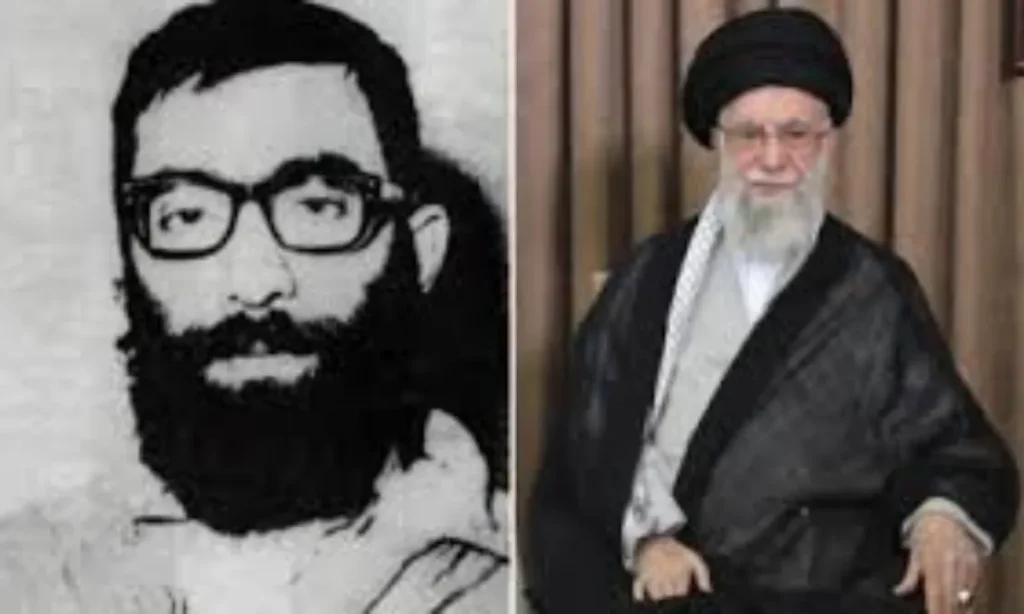
Wealth Comparisons:
| Person | Estimated Net Worth |
| Ali Khamenei (via Setad) | $95B – $200B |
| Warren Buffett | ~$130B |
| Amancio Ortega (Zara) | ~$100B |
| Donald Trump | ~$7.3B |
At $200 billion, Khamenei would rank in the Forbes global top 10 – placing him alongside the wealthiest people in human history.
Critics called it corruption on a historic scale. Supporters argued that Setad represented state stewardship for Islamic revolutionary goals. The debate never resolved – because Setad was never subjected to independent auditing.
What made the situation uniquely provocative was the setting. Khamenei delivered speeches about the evils of Western materialism. He denounced inequality. He called for Islamic simplicity. All while his office quietly controlled one of the world’s largest undisclosed fortunes.
Death of Ali Khamenei
Ayatollah Ali Khamenei died on 28 February 2026, at the age of 86. He was killed during a coordinated wave of U.S. and Israeli military strikes on targets across Iran.
The strikes were tied to escalating tensions over Iran’s nuclear programme and rising regional conflict. The attack hit Khamenei’s compound in central Tehran. Reports indicate that members of his family were also killed in the same strike.
U.S. President Donald Trump announced his death first. Iranian state media confirmed it shortly after. Iran declared seven days of public holiday and 40 days of national mourning.
Khamenei was the longest-serving head of state in the Middle East at the time of his death. He was the first sitting Supreme Leader to die in office since the Islamic Republic was founded in 1979. His death immediately triggered a succession crisis within the system he had spent 37 years building.
Frequently Asked Questions
Who was Ali Khamenei?
Ali Khamenei was the Supreme Leader of Iran from 1989 until his death in 2026. He was the highest authority in the country – above the elected president and parliament.
What was Ali Khamenei’s net worth?
His personal declared net worth was about $50,000. But through Setad, he controlled assets estimated at $95 billion to $200 billion.
What is Setad?
Setad is a massive Iranian financial organization created in 1989. It controls real estate, oil, telecoms, banks, and pharmaceuticals. It reports only to the Supreme Leader and has no external oversight.
How did Setad acquire its wealth?
It seized properties through revolutionary courts – often from religious minorities and political opponents – without giving owners any chance to defend themselves.
Where were Khamenei’s overseas assets?
Investigations point to properties in Spain (Mallorca, Madrid, Marbella), London, and funds in Venezuela, Syria, UAE, Liechtenstein, and Switzerland.
Was Ali Khamenei ever President of Iran?
Yes. He served as Iran’s third President from 1981 to 1989, before becoming Supreme Leader.
When was Ali Khamenei born?
He was born on 19 April 1939 in Mashhad, Iran.
Did Khamenei have formal religious qualifications to be Supreme Leader?
Not initially. The constitution was amended to lower the required clerical rank before he was appointed in 1989.
Who is Mojtaba Khamenei?
Mojtaba is one of Khamenei’s sons. He has been linked to his own overseas property empire worth billions, and is considered the leading hardline candidate for Supreme Leader.
Who is the new Supreme Leader of Iran?
Following Khamenei’s death, Iran’s Assembly of Experts is responsible for selecting a successor. Mojtaba Khamenei has been widely reported as the frontrunner.
How did Ali Khamenei die?
He was killed on 28 February 2026 during a coordinated U.S.-Israeli military strike on Tehran, linked to Iran’s nuclear programme and regional tensions.
Was Khamenei involved in the 1979 Islamic Revolution?
Yes. He was a close disciple of Ayatollah Khomeini and played an active role in the revolutionary movement throughout the 1970s.
What protests happened during Khamenei’s rule?
Major protests occurred in 2009 (Green Movement), 2017, 2019, and 2022 (following the death of Mahsa Amini). All were suppressed by force.
What was Iran’s economic situation during his rule?
Severe. Iran had 40% annual inflation, a poverty rate above 33%, 20% youth unemployment, a 50% electricity deficit, and ranked 177th in the world for per capita income.
How does Khamenei’s wealth compare to global billionaires?
At $200 billion, he would have ranked in the Forbes global top 10 – ahead of Warren Buffett and wealthier than most kings and presidents.
Was Khamenei richer than Donald Trump?
Almost certainly, yes. Trump’s net worth is approximately $7.3 billion. Khamenei’s controlled empire is estimated at 13 to 27 times that amount.
What is Khamenei’s legacy?
He shaped Iran into a theocratic state with a powerful military, a large proxy network, and a nuclear programme – while ordinary Iranians faced deepening economic hardship.
Did Khamenei write religious works? Yes. His official website publishes sermons, fatwas, and writings on Islamic jurisprudence and governance.
What happens to Setad now?
Following the fall of the regime, the task of unravelling Setad’s structure began. The goal is to recover the accumulated funds and return them to the Iranian people.
Did Khamenei have authority over Iran’s military?
Yes. As Supreme Leader, he held final authority over the Islamic Revolutionary Guard Corps, the armed forces, and all intelligence services.
Conclusion
Ayatollah Ali Khamenei’s net worth is not a simple number. It is the story of a system – built over 37 years – that transformed a temporary revolutionary fund into one of the world’s largest undisclosed financial empires.
Setad controlled an estimated $95 billion to $200 billion. That is nearly half of Iran’s entire GDP. It equals more than double the country’s annual oil exports. It would place Khamenei alongside the world’s wealthiest billionaires – if the money were ever acknowledged.
But it never was. No audit. No transparency. No accountability. Just an ever-growing network of property, companies, shell accounts, and front men – stretching from Tehran to Mallorca to London to Venezuela.
Khamenei is gone. The empire he built is not. Untangling it – and returning what was taken to 90 million Iranians – is the challenge that now defines Iran’s future

Noah is an experienced writer with 4 years of expertise in celebrity net worth and biography. He is currently working at celebzinfoo.com, where he provides detailed insights into the lives and success stories of famous personalities.